
Read or download our guide to the HbA1c and Time-in-Range methods of measuring blood glucose and why they are important for diabetes care.
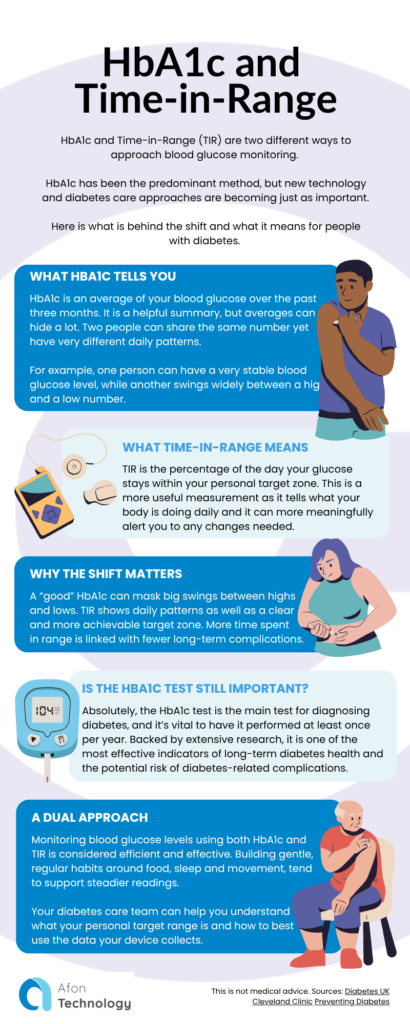
HbA1c and Time-in-Range
HbA1c and Time-in-Range (TIR) are two different ways to approach blood glucose monitoring. HbA1c has been the predominant method, but new technology and diabetes care approaches are becoming just as important. Here is what is behind the shift and what it means for people with diabetes.
What HbA1c tells you
HbA1c is an average of your blood glucose over the past three months. It is a helpful summary, but averages can hide a lot. Two people can share the same number yet have very different daily patterns. For example, one person can have a very stable blood glucose level, while another swings widely between a high and a low number.
What Time-in-Range means
TIR is the percentage of the day your glucose stays within your personal target zone. This is a more useful measurement as it tells what your body is doing daily and it can more meaningfully alert you to any changes needed.
Why the shift matters
A “good” HbA1c can mask big swings between highs and lows. TIR shows daily patterns as well as a clear and more achievable target zone. More time spent in range is linked with fewer long-term complications.
Is the HbA1c test still important?
Absolutely, the HbA1c test is the main test for diagnosing diabetes, and it’s vital to have it performed at least once per year. Backed by extensive research, it is one of the most effective indicators of long-term diabetes health and the potential risk of diabetes-related complications.
A dual approach
Monitoring blood glucose levels using both HbA1c and TIR is considered efficient and effective. Building gentle, regular habits around food, sleep and movement, tend to support steadier readings. Your diabetes care team can help you understand what your personal target range is and how to best use the data your device collects.
This is not medical advice. Sources: Diabetes UK Cleveland Clinic Preventing Diabetes
