
Read and download our factsheet on Heat, Hydration and Blood Sugar.
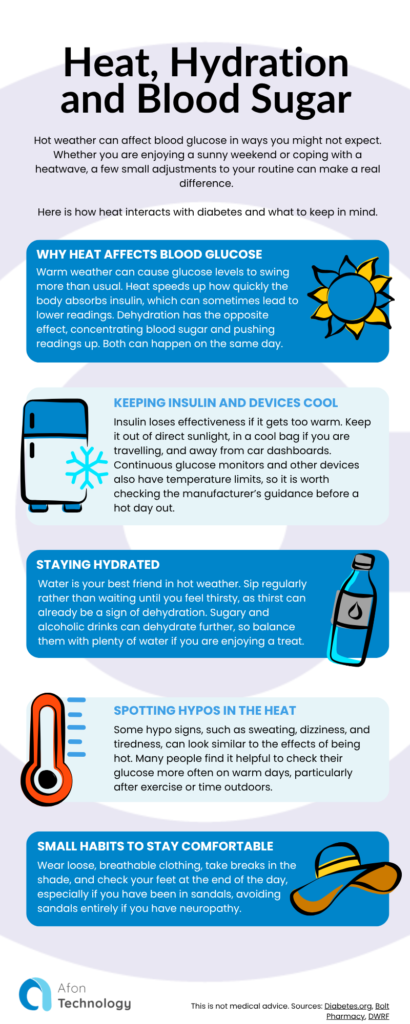
Heat, Hydration and Blood Sugar
Hot weather can affect blood glucose in ways you might not expect. Whether you are enjoying a sunny weekend or coping with a heatwave, a few small adjustments to your routine can make a real difference. Here is how heat interacts with diabetes and what to keep in mind.
Why heat affects blood glucose
Warm weather can cause glucose levels to swing more than usual. Heat speeds up how quickly the body absorbs insulin, which can sometimes lead to lower readings. Dehydration has the opposite effect, concentrating blood sugar and pushing readings up. Both can happen on the same day.
Staying hydrated
Water is your best friend in hot weather. Sip regularly rather than waiting until you feel thirsty, as thirst can already be a sign of dehydration. Sugary and alcoholic drinks can dehydrate further, so balance them with plenty of water if you are enjoying a treat.
Keeping insulin and devices cool
Insulin loses effectiveness if it gets too warm. Keep it out of direct sunlight, in a cool bag if you are travelling, and away from car dashboards. Continuous glucose monitors and other devices also have temperature limits, so it is worth checking the manufacturer’s guidance before a hot day out.
Spotting hypos in the heat
Some hypo signs, such as sweating, dizziness, and tiredness, can look similar to the effects of being hot. Many people find it helpful to check their glucose more often on warm days, particularly after exercise or time outdoors.
Small habits to stay comfortable
Wear loose, breathable clothing, take breaks in the shade, and check your feet at the end of the day, especially if you have been in sandals, avoiding sandals entirely if you have neuropathy.
This is not medical advice. Sources: Diabetes.org, Bolt Pharmacy, DWRF
