
Read and download our helpful guide to managing your diabetes during Easter celebrations.
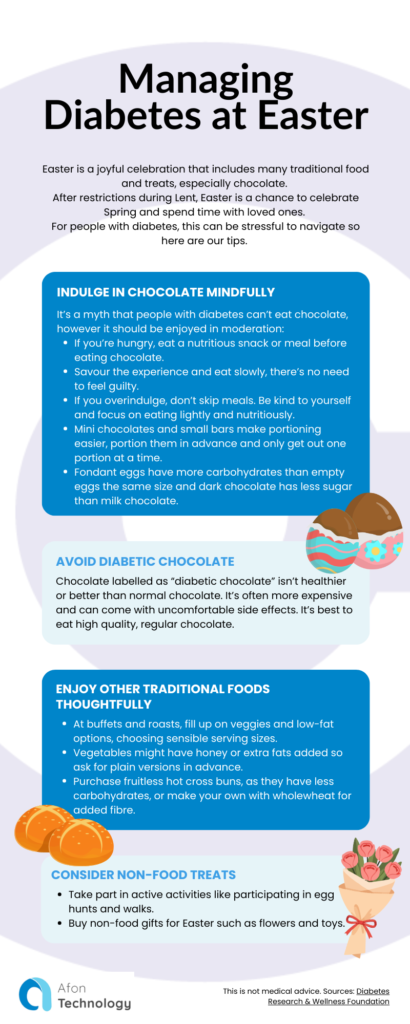
Easter is a joyful celebration that includes many traditional food and treats, especially chocolate. After restrictions during Lent, Easter is a chance to celebrate Spring and spend time with loved ones. For people with diabetes, this can be stressful to navigate so here are our tips.
Indulge in Chocolate Mindfully
It’s a myth that people with diabetes can’t eat chocolate, however it should be enjoyed in moderation:
- If you’re hungry, eat a nutritious snack or meal before eating chocolate.
- Savour the experience and eat slowly, there’s no need to feel guilty.
- If you overindulge, don’t skip meals. Be kind to yourself and focus on eating lightly and nutritiously.
- Mini chocolates and small bars make portioning easier, portion them in advance and only get out one portion at a time.
- Fondant eggs have more carbohydrates than empty eggs the same size and dark chocolate has less sugar than milk chocolate.
Avoid Diabetic Chocolate
Chocolate labelled as “diabetic chocolate” isn’t healthier or better than normal chocolate. It’s often more expensive and can come with uncomfortable side effects. It’s best to eat high quality, regular chocolate.
Enjoy Other Traditional Foods Thoughtfully
- At buffets and roasts, fill up on veggies and low-fat options, choosing sensible serving sizes.
- Vegetables might have honey or extra fats added so ask for plain versions in advance.
- Purchase fruitless hot cross buns, as they have less carbohydrates, or make your own with wholewheat for added fibre.
Consider Non-Food Treats
- Take part in active activities like participating in egg hunts and walks.
- Buy non-food gifts for Easter such as flowers and toys.
This is not medical advice. Sources: Diabetes Research & Wellness Foundation
