
Read and download our quick guide Diabetes and Ramadan to learn more about fasting at Ramadan if you have diabetes.
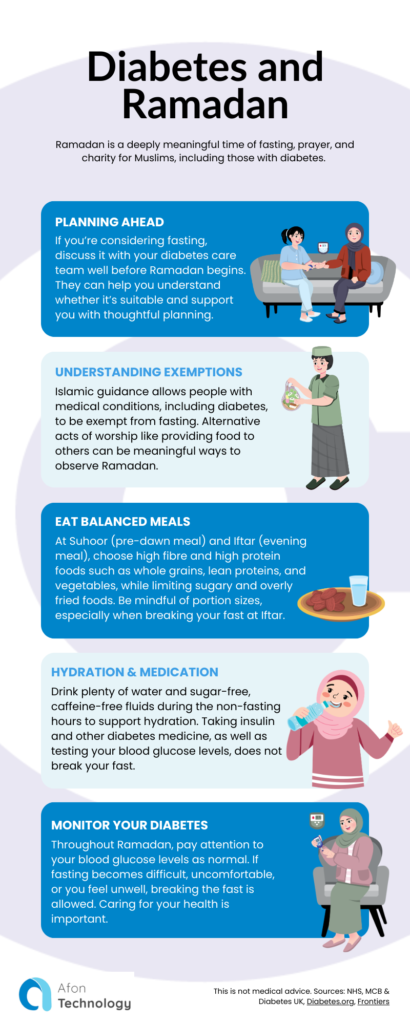
Ramadan is a deeply meaningful time of fasting, prayer, and charity for Muslims, including those with diabetes.
Planning Ahead
If you’re considering fasting, discuss it with your diabetes care team well before Ramadan begins. They can help you understand whether it’s suitable and support you with thoughtful planning.
Understanding Exemptions
Islamic guidance allows people with medical conditions, including diabetes, to be exempt from fasting. Alternative acts of worship like providing food to others can be meaningful ways to observe Ramadan.
Eat Balanced Meals
At Suhoor (pre-dawn meal) and Iftar (evening meal), choose high fibre and high protein foods such as whole grains, lean proteins, and vegetables, while limiting sugary and overly fried foods. Be mindful of portion sizes, especially when breaking your fast at Iftar.
Hydration & Medication
Drink plenty of water and sugar-free, caffeine-free fluids during the non-fasting hours to support hydration. Taking insulin and other diabetes medicine, as well as testing your blood glucose levels, does not break your fast.
Monitor Your Diabetes
Throughout Ramadan, pay attention to your blood glucose levels as normal. If fasting becomes difficult, uncomfortable, or you feel unwell, breaking the fast is allowed. Caring for your health is important.
This is not medical advice. Sources: NHS, MCB & Diabetes UK, Diabetes.org, Frontiers
